The Nigerian Army is the largest component of the Nigerian Armed Forces, and it plays a crucial role in national security, peacekeeping, and territorial defense. Just like any professional military organization, the Nigerian Army operates under a strict and well-defined hierarchy. This hierarchy is structured into ranks, each with its own roles, responsibilities, and insignias or symbols that distinguish them.
In this article, we will provide a detailed breakdown of all the ranks in the Nigerian Army, explain the meaning of their symbols, and help you understand how the ranking system works in both peacetime and wartime. If you’re interested in joining the military or just want to understand how the Army functions, this guide will give you a clear and complete picture.
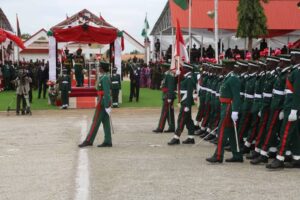
Understanding the Army Ranking Structure
The Nigerian Army ranks are divided into two main categories:
- Commissioned Officers
- Non-Commissioned Officers and Enlisted Personnel
Let’s explore both categories one by one and examine their ranks and symbols in detail.
1. Commissioned Officers Ranks in the Nigerian Army
Commissioned officers are the leaders and decision-makers in the military. They are appointed through formal training and education, often from institutions like the Nigerian Defence Academy (NDA) or through the Direct Short Service (DSS) and Short Service Combatant (SSC) programs.
List of Commissioned Officer Ranks (From Highest to Lowest)
- Field Marshal
- General
- Lieutenant General
- Major General
- Brigadier General
- Colonel
- Lieutenant Colonel
- Major
- Captain
- Lieutenant
- Second Lieutenant
Detailed Breakdown of Commissioned Ranks and Their Symbols
1. Field Marshal
- Symbol: A crossed sword and baton with a wreath and the Nigerian coat of arms.
- Description: This is the highest possible rank in the Nigerian Army, although it is mostly ceremonial and rarely held. It is equivalent to a five-star general in other armies.
2. General
- Symbol: A crossed sword and baton beneath an eagle and two stars.
- Role: Commands large military formations; strategic military planning and national defense policy execution.
3. Lieutenant General
- Symbol: A crossed sword and baton beneath an eagle and one star.
- Role: Often serves as Chief of Army Staff. Oversees nationwide military operations.
4. Major General
- Symbol: A crossed sword and baton with an eagle above.
- Role: Commands a division. Responsible for field-level military operations and management.
5. Brigadier General
- Symbol: A crossed sword and baton with one star above.
- Role: Commands a brigade and supervises several battalions.
6. Colonel
- Symbol: One eagle.
- Role: Commands a regiment or battalion and is responsible for tactical field decisions.
7. Lieutenant Colonel
- Symbol: One eagle and one star.
- Role: Often second-in-command of a battalion. Assists the Colonel in operational duties.
8. Major
- Symbol: One eagle and two stars.
- Role: Commands a company and serves as a senior field officer.
9. Captain
- Symbol: Three stars in a row.
- Role: Commands a company and is responsible for training, discipline, and welfare of soldiers.
10. Lieutenant
- Symbol: Two stars.
- Role: Often second-in-command of a platoon or company.
11. Second Lieutenant
- Symbol: One star.
- Role: The most junior commissioned officer rank. Commands a platoon or serves as an assistant.
2. Non-Commissioned Officers (NCOs) and Enlisted Personnel Ranks
These ranks consist of soldiers who enter the Army through recruitment or basic training and are promoted based on merit, service, and examination. They make up the majority of the Nigerian Army workforce and perform operational, technical, and administrative duties.
List of NCO and Enlisted Ranks (From Highest to Lowest)
- Warrant Officer Class One (WO1)
- Warrant Officer Class Two (WO2)
- Staff Sergeant
- Sergeant
- Corporal
- Lance Corporal
- Private Soldier
- Recruit
Detailed Breakdown of NCO Ranks and Their Symbols
1. Warrant Officer Class One (WO1)
- Symbol: The Nigerian Coat of Arms in a wreath.
- Role: Highest rank for enlisted personnel. Acts as senior advisor to commanders on enlisted matters.
2. Warrant Officer Class Two (WO2)
- Symbol: The Nigerian Coat of Arms without a wreath.
- Role: Acts as a liaison between officers and junior soldiers.
3. Staff Sergeant
- Symbol: Three upward-pointing chevrons with an eagle above.
- Role: Responsible for discipline, training, and administration within a platoon.
4. Sergeant
- Symbol: Three chevrons.
- Role: Team leader and junior supervisor for a section of soldiers.
5. Corporal
- Symbol: Two chevrons.
- Role: Assists the sergeant in managing junior soldiers.
6. Lance Corporal
- Symbol: One chevron.
- Role: Junior supervisor. Leads a small team or section.
7. Private Soldier
- Symbol: No insignia.
- Role: The entry-level rank for trained soldiers.
8. Recruit
- Symbol: No insignia.
- Role: A new entrant in training. Not yet a full member of the Nigerian Army.
Meaning and Importance of Rank Symbols in the Army
The symbols or insignias used in the Army are not just decorative—they are essential tools for command, discipline, and recognition. These symbols tell you at a glance who is in charge, who you report to, and who reports to you.
Why Symbols Matter:
- Authority: They establish a clear chain of command.
- Discipline: They help enforce military order and structure.
- Recognition: They allow soldiers and civilians to quickly identify leadership.
- Uniformity: They promote consistency and pride in service.
Each insignia is worn on the shoulder, chest, or sleeve of the uniform, depending on the soldier’s role and the uniform type.
Path of Promotion in the Nigerian Army
Promotion in the Nigerian Army is based on a combination of:
- Years of service
- Performance in duties
- Professional training
- Examinations and recommendations
For officers, attending military courses and completing relevant certifications play a major role in promotion. For non-commissioned officers, excellence in conduct, discipline, and operational effectiveness matters a lot.
Nigerian Army Training Institutions and Their Role
Before attaining a rank in the Nigerian Army, soldiers and officers must go through training. Some notable institutions include:
- Nigerian Defence Academy (NDA) – for officers
- Depot Nigerian Army, Zaria – for recruits
- Nigerian Army School of Infantry (NASI)
- Command and Staff College, Jaji – for advanced leadership training
These institutions not only train soldiers but also instill discipline, military ethics, and the values of service to the nation.
Final Thoughts
The rank and symbol system in the Nigerian Army is one of the most organized structures in the country’s defense sector. Whether you are a civilian seeking to understand how the military operates, a prospective recruit preparing for a career in the armed forces, or just a curious reader, knowing the ranks and their symbols gives you insight into how discipline, command, and responsibility are maintained in one of Africa’s strongest armies.
From the ceremonial dignity of a Field Marshal to the hard-earned stripes of a Corporal, each rank is a badge of honor. It represents not just authority, but also dedication, experience, and years of service to Nigeria.
If you’re considering a future in the Nigerian Army, understanding this structure is your first step to wearing one of those respected insignias.
Do you want more content like this on Nigerian military careers, recruitment, or salary guides? Stay updated with our blog and get the latest information to guide your journey!
